The Six Wild Cat Species of Kenya: From Melanistic Servals to Africa’s Largest Lion Populations
Kenya is one of Africa's greatest wildlife destinations, renowned for its spectacular savannahs, mountain forests, arid deserts, and rich diversity of mammals. Among its most charismatic predators are six species of wild cats, ranging from the iconic African Lion to the elusive African Wildcat. Together these species occupy almost every habitat found in the country, from the snow-capped slopes of Mount Kenya and the bamboo forests of the Aberdare Range to the dry thorn scrub of Tsavo and the vast grasslands of the Maasai Mara.
Kenya is particularly important for wild cat conservation. It supports one of Africa's largest remaining lion populations, globally significant numbers of Cheetahs and Leopards, extensive populations of Servals, and healthy populations of Caracals and African Wildcats across much of the country. At the same time, these species face increasing pressures from habitat fragmentation, expanding agriculture, human-wildlife conflict, road development, illegal poisoning, and climate change.
The most recent National Wildlife Census (2025) provides the most comprehensive assessment of the conservation status of Kenya's mammals, complementing the global assessments of the International Union for Conservation of Nature (IUCN). Together these assessments provide an excellent picture of the current state of Kenya's wild cats.
One fascinating feature unique to Kenya is the regular occurrence of melanistic (black) Servals in the cool montane forests and moorlands of the Aberdare Range. These striking cats, once considered extremely rare, have become one of Kenya's most sought-after wildlife sightings.
- Kenya's Wild Cats at a Glance
- Southern Lion (Panthera leo melanochaita)
- African Leopard (Panthera pardus pardus)
- Southern and Eastern African Cheetah (Acinonyx jubatus jubatus)
- Eastern Serval (Leptailurus serval lipostictus)
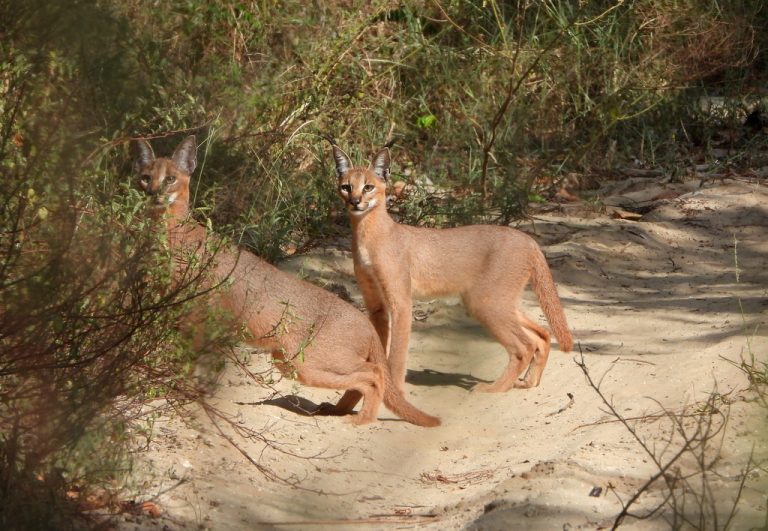
- Southern and Eastern Caracal (Caracal caracal caracal)
- North African Wildcat (Felis lybica lybica)
- Where to See Kenya's Wild Cats
- Looking Ahead
- Key Sources
Kenya's Wild Cats at a Glance
The six wild cat species of Kenya are the Lion, Leopard, Cheetah, Serval, Caracal and Afro-Asiatic Wildcat.
Species | Subspecies in Kenya | Global Status | |
|---|---|---|---|
1 Lion | Panthera leo melanochaita | Vulnerable | |
2 Leopard | Panthera pardus pardus | Vulnerable | |
3 Cheetah | Acinonyx jubatus jubatus | Vulnerable | |
4 Serval | Leptailurus serval lipostictus | Least Concern | |
5 Caracal | Caracal caracal caracal | Least Concern | |
6 Afro-Asiatic Wildcat | Felis lybica lybica | Least Concern |
Southern Lion (Panthera leo melanochaita)
Global IUCN Red List: Vulnerable
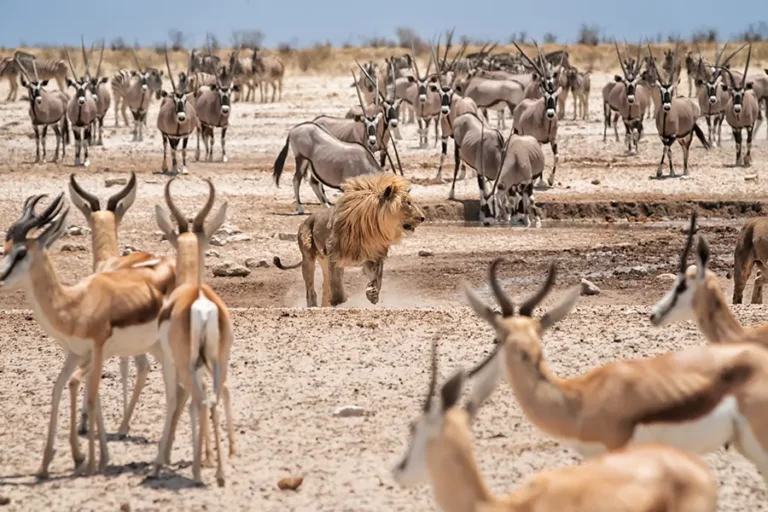
The African Lion occurring in Kenya belongs to the subspecies Panthera leo melanochaita, known as the Southern Lion. This subspecies occupies most of eastern and southern Africa following the taxonomic revision adopted by the IUCN Cat Specialist Group.
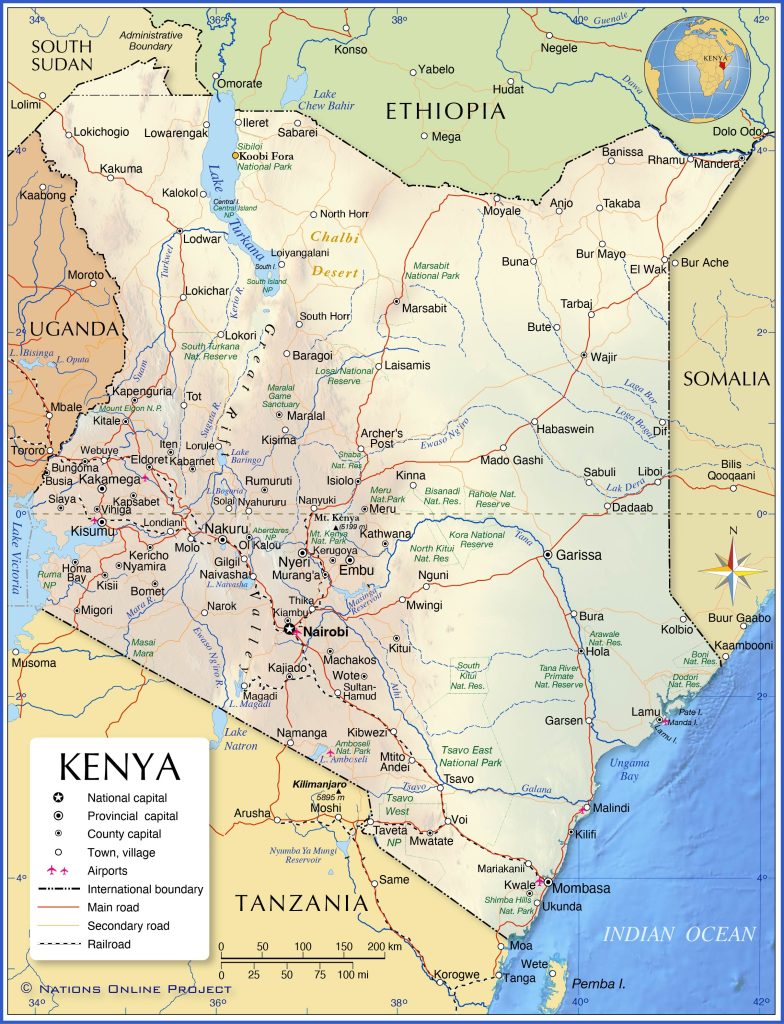
Kenya supports one of East Africa's largest remaining lion populations. Current estimates suggest approximately 2,400–2,600 lions occur nationally, although numbers fluctuate as new surveys become available. Major strongholds include Maasai Mara Ecosystem, Tsavo East and West National Parks, Amboseli Ecosystem, Laikipia Conservancies, Meru Conservation Area and Samburu Landscape.
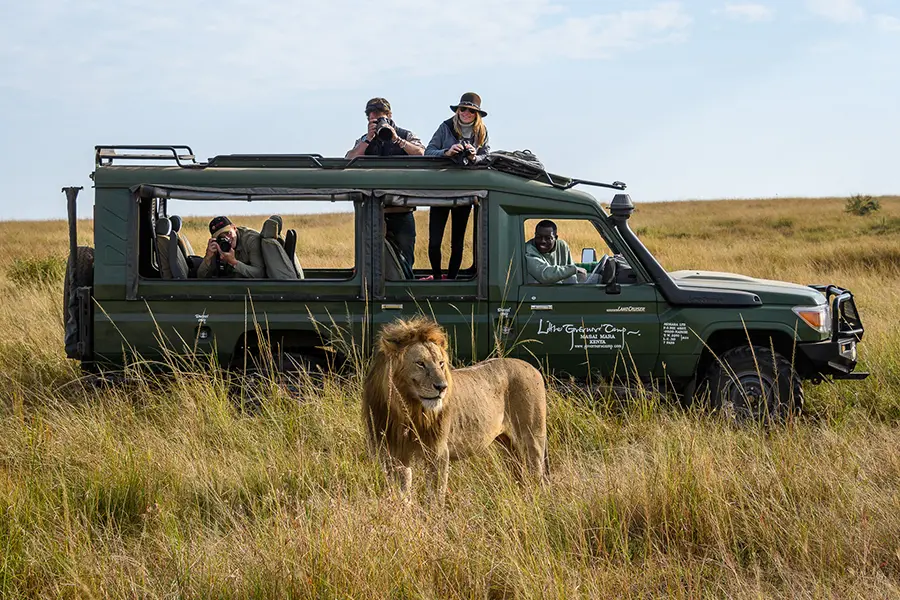
The Maasai Mara alone supports one of Africa's highest lion densities, largely because of abundant migratory prey associated with the Serengeti-Mara ecosystem. Despite these encouraging numbers, lions remain threatened by retaliatory killings following livestock depredation, accidental snaring, habitat fragmentation, and loss of dispersal corridors.
Kenya has been at the forefront of lion research for decades. Major ongoing programmes include Mara Predator Conservation Programme, Lion Landscapes, Wildlife Research and Training Institute (WRTI) and Kenya Wildlife Service (KWS). Researchers continue to monitor prides using GPS collars, investigate conflict mitigation with pastoral communities, and study landscape connectivity across southern Kenya.
African Leopard (Panthera pardus pardus)
Global IUCN Red List: Vulnerable
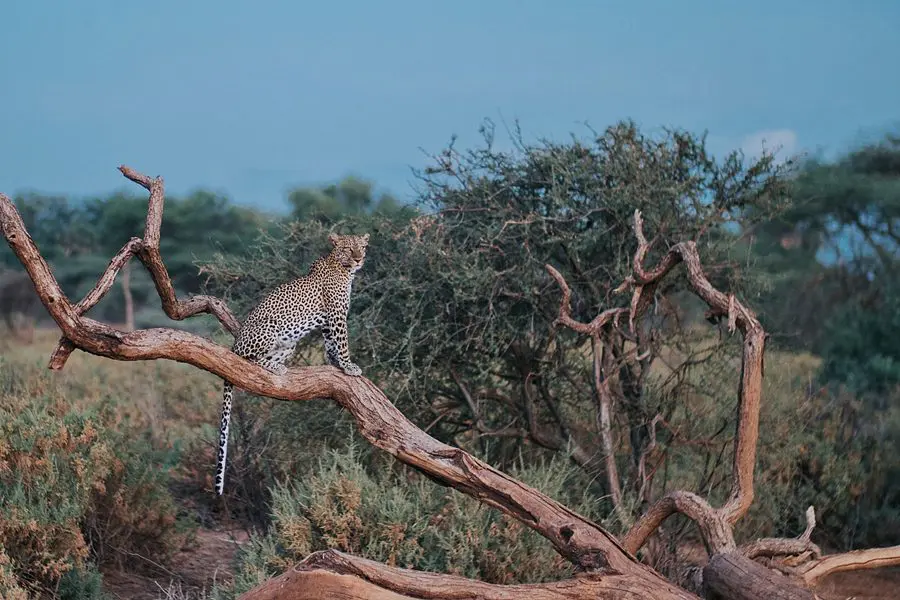
Kenya's Leopards belong to the widespread African Leopard subspecies Panthera pardus pardus.
Leopards remain surprisingly widespread throughout the country, occupying habitats ranging from coastal forests and montane forests to semi-deserts and savannahs.
Important populations occur in Maasai Mara, Tsavo, Samburu, Meru, Laikipia, Amboseli, Aberdare and Mount Kenya forests.
Because of their secretive behaviour, accurate national population estimates are difficult to obtain, however one recent study estimated approximately 3,800. Camera trapping studies consistently show that Leopards remain relatively common in protected areas but have disappeared from many densely settled agricultural regions.
Major threats include conflict with livestock farmers, bushmeat snaring, habitat loss and illegal poisoning.
Several long-term camera-trapping projects are underway across Kenya, particularly within the Mara ecosystem and northern conservancies, examining population density, habitat use and connectivity.
Southern and Eastern African Cheetah (Acinonyx jubatus jubatus)
Global IUCN Red List: Vulnerable
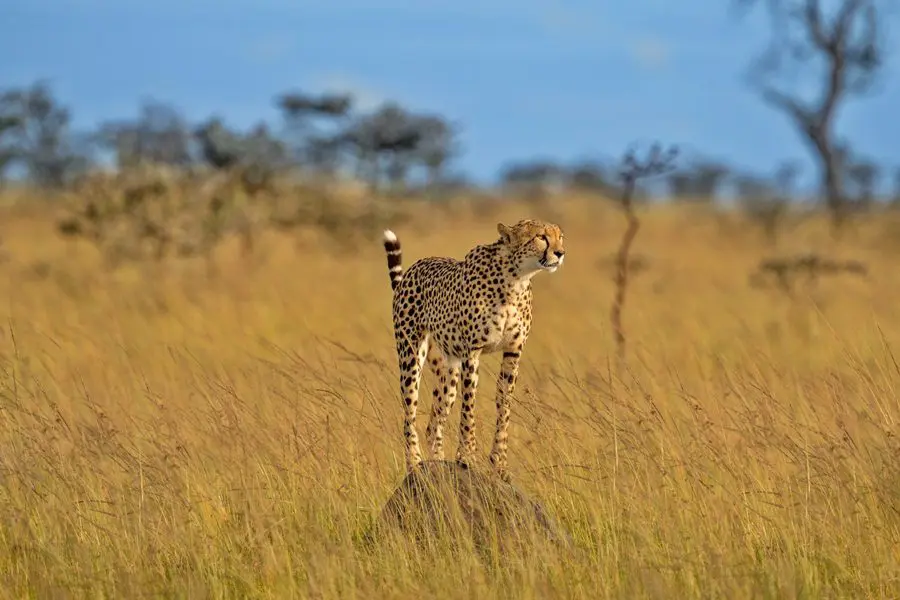
The African Cheetah of Kenya belong to Acinonyx jubatus jubatus, the Southern and Eastern African Cheetah, following the modern taxonomic revision recognising this subspecies across eastern and southern Africa.
Kenya probably supports around 600 Cheetahs, making it one of the species' global strongholds. Important landscapes include Maasai Mara, Amboseli, Tsavo, Laikipia, Samburu and Northern rangelands.
Unlike lions and leopards, cheetahs require large expanses of open habitat where they can hunt gazelles and other medium-sized antelope using their remarkable speed. The biggest threats include habitat fragmentation, loss of open rangelands, declining prey, competition with lions and hyenas and conflict with livestock farmers.
Kenya hosts several internationally recognised Cheetah research programmes. The Mara Cheetah Project has monitored individual Cheetahs for many years, documenting survival, reproductive success, territory use and cub mortality. Individual spot patterns allow researchers to identify every adult Cheetah photographed within the study area.
Eastern Serval (Leptailurus serval lipostictus)
Global IUCN Red List: Least Concern
The Servals found across Kenya are generally assigned to the East African subspecies Leptailurus serval lipostictus, although subspecies boundaries within Servals remain poorly resolved and require additional genetic study.
Servals are widespread throughout Kenya wherever suitable wetlands, tall grasslands and marshes occur. Excellent locations include Maasai Mara, Amboseli, Lake Naivasha, Aberdare National Park, Mount Kenya and Saiwa Swamp National Park.
Kenya's Famous Black Servals
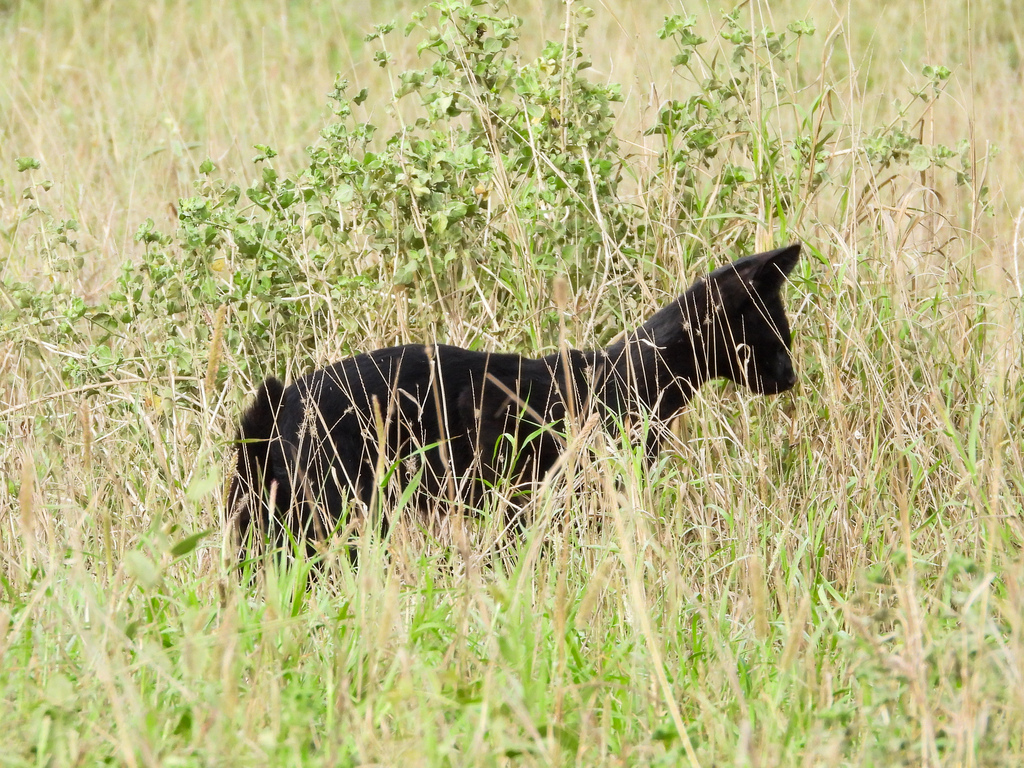
Perhaps Kenya's most famous wild cat phenomenon is the occurrence of melanistic Servals in the Aberdare Range. Melanism results from an inherited genetic mutation producing excessive dark pigmentation while the characteristic Serval spots remain faintly visible beneath the black coat. The dark coloration may provide improved camouflage within the dense bamboo forests and montane vegetation, although this hypothesis remains unproven.
These extraordinary cats appear to be significantly more common in Kenya's cool, high-altitude forests than anywhere else in Africa. Sightings have been reported for some time now in the Aberdare National Park and surrounding area. These black Servals have become one of Kenya's most sought-after wildlife sightings and continue to attract photographers from around the world.
Camera-trap surveys within the Aberdare ecosystem continue documenting the frequency and distribution of melanistic Servals while broader studies investigate habitat use across Kenya's protected wetlands.
Southern and Eastern Caracal (Caracal caracal caracal)
Global IUCN Red List: Least Concern
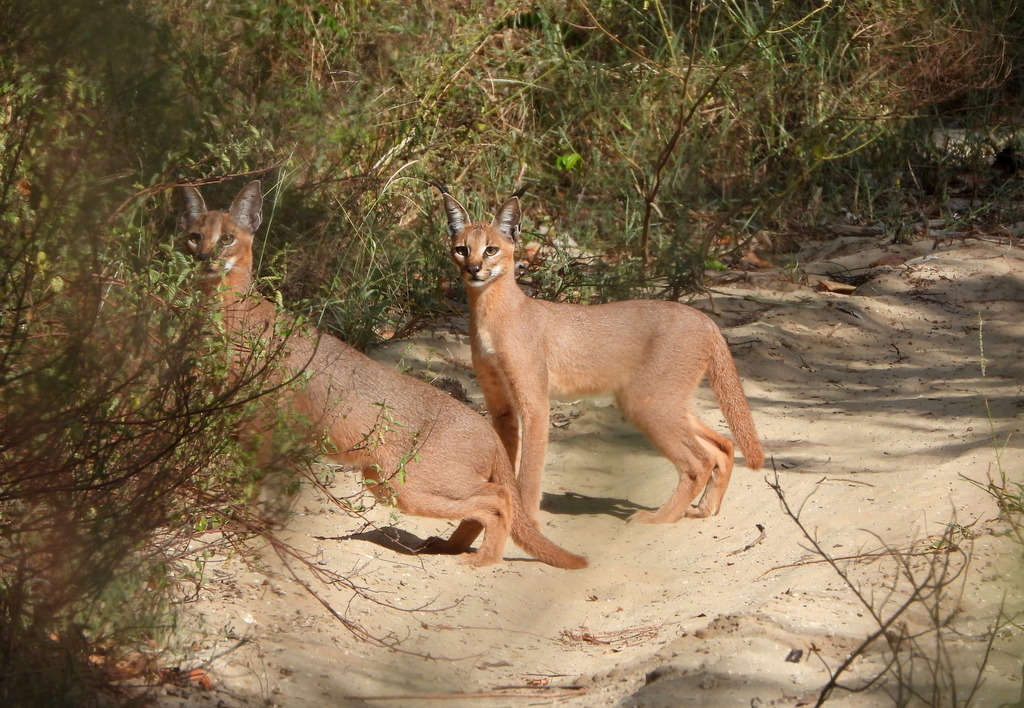
Kenya's Caracals belong to Caracal caracal caracal, found across southern and east Africa.
Although widespread, Caracals are rarely observed because they are primarily nocturnal and exceptionally secretive.
They occupy semi-arid bushland, savannah, rocky hills, woodland and montane grasslands. Major populations occur within Tsavo, Samburu, Laikipia, Meru, Amboseli and Maasai Mara.
Caracals prey primarily on hares, hyraxes, rodents, birds and small antelope. Their spectacular vertical leaps of over 3 metres enable them to catch birds in flight.
Recent camera-trapping programmes across Kenya's northern conservancies have greatly improved understanding of Caracal distribution, habitat preferences and coexistence with larger predators.
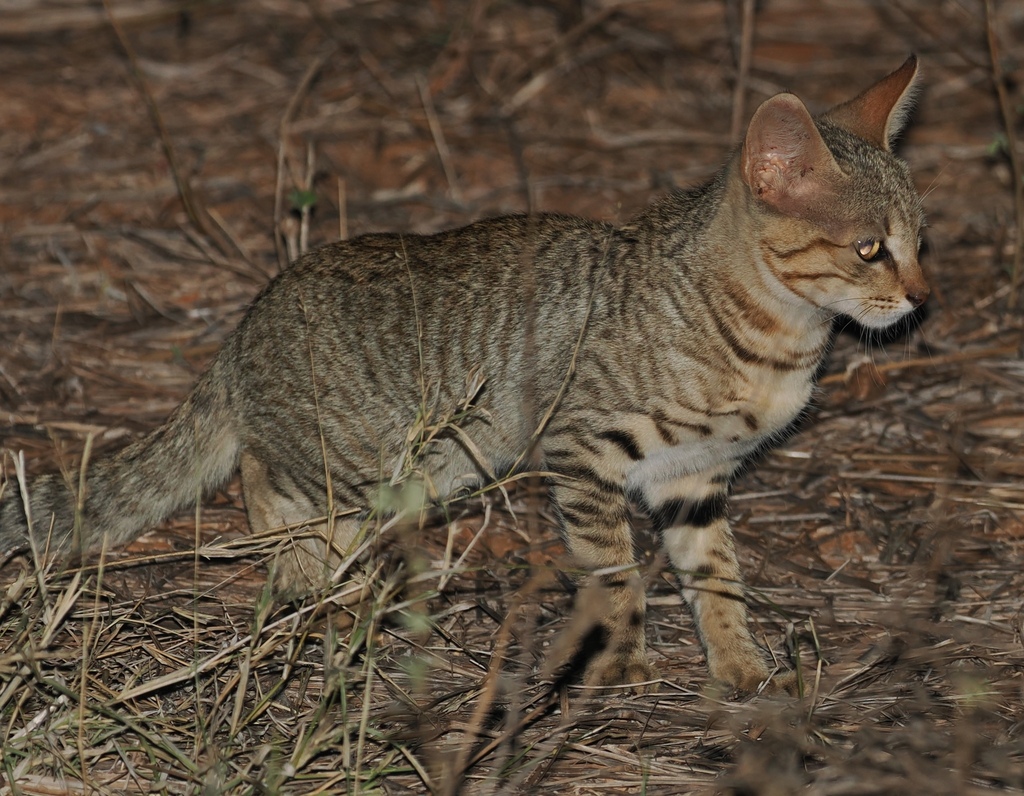
North African Wildcat (Felis lybica lybica)
Global IUCN Red List: Least Concern
The African Wildcat occurring in Kenya belongs to Felis lybica lybica, the North African Wildcat, although the exact boundaries between African Wildcat populations across eastern Africa continue to be investigated genetically.
This small predator remains widespread across dry savannah, bushland, open woodland and lightly wooded grasslands. African Wildcats are highly adaptable and often occur surprisingly close to human settlements.
The greatest conservation concern is not population decline but hybridisation with domestic cats, which threatens the long-term genetic integrity of wild populations. Other threats include disease transmission from domestic cats and persecution.
Genetic studies throughout Africa increasingly focus on identifying pure African Wildcat populations and assessing the extent of hybridisation with feral domestic cats.
Where to See Kenya's Wild Cats
Some protected areas are particularly rewarding for observing multiple species.
- Maasai Mara National Reserve - the country's premier destination for Lions, Leopards, Cheetahs and Servals, with occasional Caracals and African Wildcats.
- Tsavo East and Tsavo West National Parks - excellent for Lions, Leopards, Cheetahs, Caracals and African Wildcats across one of Africa's largest protected ecosystems.
- Amboseli National Park - known for Lions, Cheetahs, Leopards and Servals against the backdrop of Mount Kilimanjaro.
- Samburu National Reserve - outstanding for Leopards, Lions and Caracals within Kenya's northern drylands.
- Meru National Park - supports all six wild cat species, although some are difficult to observe.
- Laikipia Conservancies - private conservancies such as Ol Pejeta, Lewa and neighbouring properties support healthy populations of Lions, Leopards, Cheetahs and Caracals while contributing substantially to predator research.
- Aberdare National Park - the best location in the world to search for the remarkable melanistic Serval, while also supporting Leopards, Lions, Caracals and African Wildcats.
- Mount Kenya National Park - provides habitat for Servals, Leopards and African Wildcats in high-altitude ecosystems.
- Saiwa Swamp National Park -one of the finest places to observe Servals hunting around wetlands.
Looking Ahead
Kenya remains one of Africa's most important countries for wild cat conservation. It supports globally significant populations of Lions, Cheetahs and Leopards while maintaining healthy populations of the smaller felids across an impressive diversity of habitats. Long-term research programmes led by the Kenya Wildlife Service, Wildlife Research and Training Institute, universities, conservation organisations and local conservancies continue to improve our understanding of these predators and inform practical conservation. There was a rare sighting of a seventh wild cat species - an African Golden Cat in 2019 (sadly as roadkill), but no further sightings since.
Continued investment in community conservation, wildlife corridors, livestock conflict mitigation and protected landscapes will be essential if Kenya's six magnificent wild cat species are to thrive for generations to come. Whether watching a Lion pride on the Maasai Mara, photographing a Cheetah scanning the plains, or hoping for the rare glimpse of a black Serval in the misty Aberdares, Kenya offers some of the finest wild cat experiences anywhere on Earth.
Key Sources
- Bauer, H. et al. (2023–2024). African Lion status and conservation publications.
- Durant, S.M. et al. Cheetah conservation and population assessments.
- Hunter, L. Wild Cats of the World (2nd edition). Bloomsbury.
- International Union for Conservation of Nature (IUCN). The IUCN Red List of Threatened Species (latest species assessments for Panthera leo, Panthera pardus, Acinonyx jubatus, Leptailurus serval, Caracal caracal and Felis lybica).
- IUCN Cat Specialist Group. Cat News and regional conservation strategies.
- Kitchener, A.C. et al. (2017). A revised taxonomy of the Felidae. Cat News Special Issue 11.
- Mara Predator Conservation Programme publications.
- Mara Cheetah Project reports and peer-reviewed publications.
- Lion Landscapes Kenya research publications.
- Kenya Wildlife Conservancies Association (KWCA).
- Kenya Wildlife Service (KWS).
- Wildlife Conservation Society (WCS) camera-trap and carnivore research publications.
- Wildlife Research and Training Institute. (WRTI). National Wildlife Census 2025 Technical Report.
AI Disclosure: This article was drafted with AI assistance, then reviewed and edited by Mandy before publication.