
African Serval Cat Jumping and Serval Hunting ~ Videos
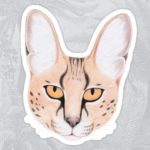
- Serval Adaptations
- Serval Videos
- Smithsonian Channel: Educational video about the Serval cat's jumping ability and other hunting adaptations.
- NatGeo Wild: Young male Serval hunting a mole snake in South Africa.
- Lion Mountain TV: Serval behaviour including Serval cat jumping to catch a francolin and interaction with another male Serval.
- BBC One: Serval kittens practicing their hunting skills.
- Earth Touch: Short documentary about Servals thriving right next to an industrial power plant in South Africa.
African Serval Cat

Serval Adaptations
The Serval cat (Leptailurus serval) is a remarkable wild feline native to sub-Saharan Africa, known for its exceptional hunting abilities and extraordinary leaping skills. The Serval’s adaptations, including its large ears and long legs, contribute to its ability to hunt effectively and navigate the wild in a way few other felines can. These features not only enhance the serval’s ability to detect prey but also enable it to execute remarkable jumps that set it apart from other predators in its ecosystem.
Serval's Large Ears
One of the most striking features of the serval is its large, bat-like ears. These ears are not just a distinctive physical trait but serve a crucial function in the serval's hunting strategy. Unlike many cats, which rely on their vision to locate prey, the serval has an enhanced sense of hearing that allows it to detect small mammals, birds, and other prey moving in the grass or beneath the ground. The serval’s large ears can rotate independently, enabling it to pinpoint the exact location of sounds, even from long distances. This keen sense of hearing is particularly important in its natural habitat of tall grasslands and savannas, where visibility is often limited. According to the journal Biology Letters, the serval’s auditory sensitivity helps it track and hunt prey that would be difficult to detect otherwise, such as rodents and birds (Buchanan et al., 2007).
Serval's Long Legs
Another crucial adaptation is the serval’s long, slender legs. These legs are not just for show but are integral to the cat's ability to leap incredible distances. The serval can jump up to 12 feet (3.7 meters) high and leap distances of up to 10 feet (3 meters). This remarkable jumping ability is particularly useful when hunting for birds or catching prey that attempts to escape into the air. The long legs, combined with the serval’s powerful muscles, enable it to execute these high, graceful jumps with precision and speed. The serval’s jumping technique is often described as an “arched” or “curved” leap, which allows it to strike from above, taking advantage of gravity to overpower its prey (Buchanan et al., 2007). This ability also gives the serval an advantage when hunting in dense vegetation, as it can leap above the grass to catch animals that would otherwise be hidden from view.
The serval's long legs also contribute to its agility and speed. It is an excellent runner and can cover great distances quickly while chasing down prey. The elongated limbs allow for greater stride length and speed, making the serval an efficient hunter when stalking prey on the ground. However, its most extraordinary feature remains its ability to leap. The serval's hunting strategy often involves stalking its prey and then using a combination of stealth, agility, and its extraordinary jumping power to secure a meal.
In conclusion, the serval cat is an extraordinary predator that has evolved some of the most impressive physical attributes among wild felines. Its large ears enable it to detect prey with remarkable accuracy, while its long legs provide the speed and jumping power needed to capture prey in ways that few other animals can replicate. These unique adaptations allow the serval to hunt in environments that challenge other predators, making it a fascinating example of evolution at work.
Reference
Buchanan, R. W., D. G. Brainerd, and R. G. O'Neill. "Hearing and the evolution of the Serval's hunting strategy." Biology Letters, 2007.


Serval Videos
These videos about the African Serval Cat have excellent footage of jumping and Servals hunting. These amazing African wild cats have the longest legs and the largest ears of all cats relative to their size. As described above, these unique adaptations enable Serval cats to jump and hunt in an extraordinary way.
These narrated video clips are all taken in the wild by professional filmmakers. The short documentary at the end shows how Servals can adapt to a human altered environment as long as there is sufficient prey and minimal disturbance.
Discover more information about Servals, Serval characteristics and Serval distribution in Africa.
Smithsonian Channel: Educational video about the Serval cat's jumping ability and other hunting adaptations.
With its large ears the Serval uses echolocation to detect prey hidden in the grasses. Then using their long legs and incredible jumping power Servals can leap vertically up to three meters to catch birds flushed from the grasses.
Serval clip at 28:40 minutes.

Stream a new African Safari every night
Presented by the highly experienced safari guide James Currie, this exciting series takes you onto the plains and into the jungles of Africa.
From UNESCO World Heritage sites to stunning bird sanctuaries, and from national parks to hidden-gem wilderness areas, experienced travelers and armchair enthusiasts alike will enjoy this exhilarating tour of Africa.
NatGeo Wild: Young male Serval hunting a mole snake in South Africa.
Reptiles are a common prey item for Servals and snakes are no exception, although tackling this unpredictable prey requires lightening fast reactions. It has been recorded that Servals have up to a 50% success rate in hunting prey.
Lion Mountain TV: Serval behaviour including Serval cat jumping to catch a francolin and interaction with another male Serval.
Watch an African Serval jumping with incredible power and speed to catch a ground bird flying up in an attempt to escape the predator.
BBC One: Serval kittens practicing their hunting skills.
Even at this young age, Serval kittens are already amazingly fast and reactive when play-hunting with each other.
Earth Touch: Short documentary about Servals thriving right next to an industrial power plant in South Africa.
"The world's largest coal liquefaction plant has some unusual neighbours: the densest population of elusive Serval cats anywhere on the planet."