African Caracal Cat (Caracal caracal) Facts

African Caracal Cat
Featured image: Caracal siblings walking © Martin Harvey / www.photoshot.com
Caracal Facts
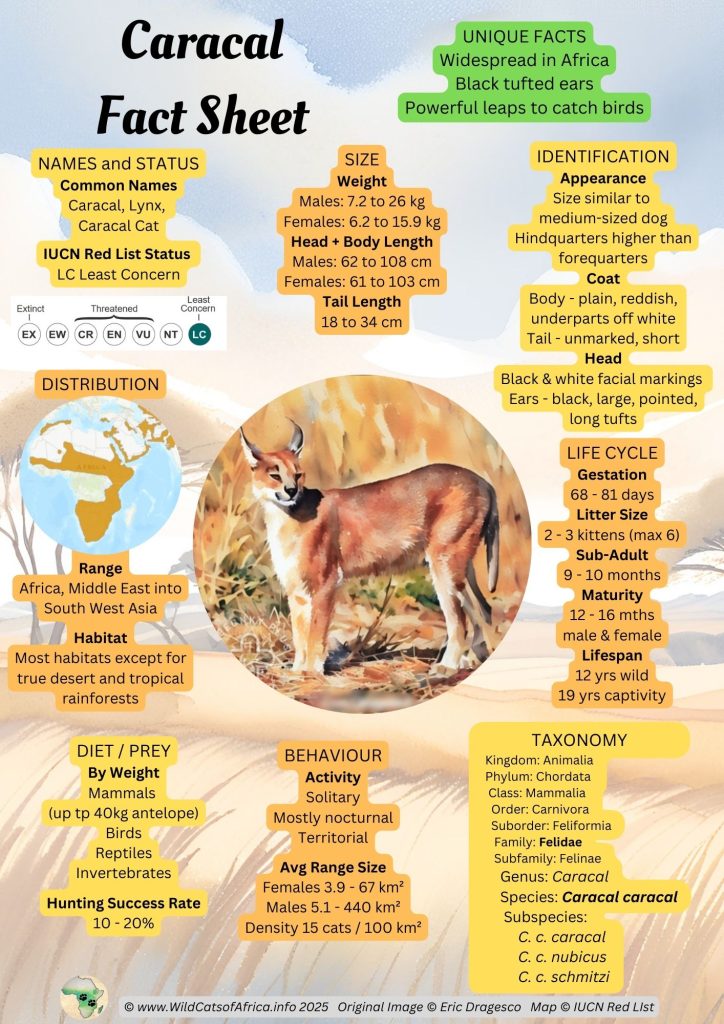
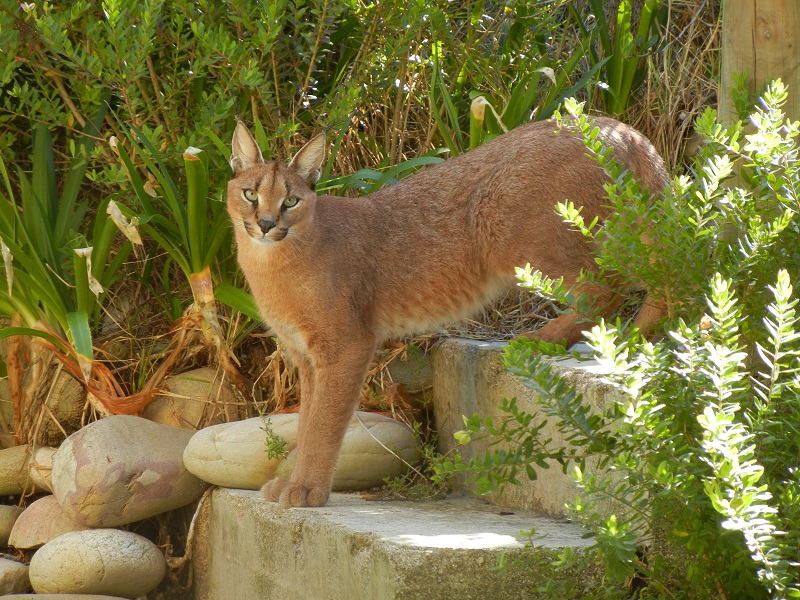
Caracals are the largest of Africa's smaller cats and easily recognisable by their large, black, tufted ears and admired for their amazing jumping ability.
Here are the key facts about this beautiful and agile cat:
Scientific Name
Caracal caracal
Common Names
African Caracal, African Lynx, Asian Caracal, Persian Lynx, Caracal Lynx, Desert Lynx
Name Origin
The name Caracal comes from Turkish word "karakulak" meaning 'black eared'. The Swahili name for Caracal is "Simbamangu" which means 'secretive lion' or 'secretive cat' as they are rarely seen.
Identification
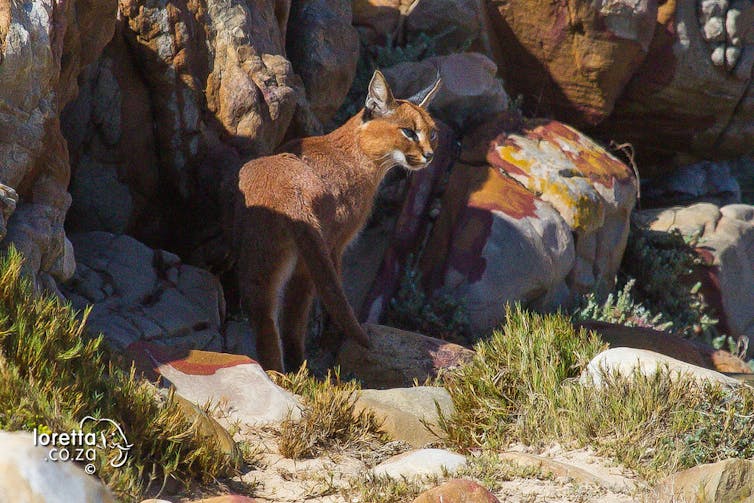
The Caracal has distinctive long dark tufts on its large, pointed ears. It has a reddish-brown plain coat and is one of the few cat species that don't have any spots or stripes.
Distribution
Caracals occur throughout Africa and into parts of south Asia as far as India but are absent from the extreme desert regions and rainforests.
Unique Behaviour
Caracals are capable of tremendous aerial acrobatic jumps. They can leap into the air and knock down 10-12 birds at one time (see video below).
Life Cycle
Caracal females can reproduce any time during the year, although births may peak at certain times in areas of distinct seasonal variation. Two to three Caracal kittens are born in a litter, and kittens will remain with the female until nine or ten months old.
Life Cycle in DetailHistory
Caracals were once tamed and trained for bird hunting in Iran and India. They were put into arenas containing a flock of pigeons, and wagers were made as to how many birds the cat would take down. This is the origin of the expression "to put a cat among the pigeons".
Which Safari Destination is on your Bucket List?
Further Information
The following professional organizations have well researched and accurate information on Caracals:
- Conservation Status - IUCN Red List
- Detailed Account and Literature List - IUCN Cat Specialist Group
- Species Overview - International Society for Endangered Cats (ISEC)
- Fact File pdf - Arkive Wildscreen
- Urban Caracal Project - Research South Africa
- South African Mammal Red List - African Caracal and Methods (10Mb)

from the book Cats Of Africa
Stream a new African Safari every night
Presented by the highly experienced safari guide James Currie, this exciting series takes you onto the plains and into the jungles of Africa.
From UNESCO World Heritage sites to stunning bird sanctuaries, and from national parks to hidden-gem wilderness areas, experienced travelers and armchair enthusiasts alike will enjoy this exhilarating tour of Africa.
Articles about African Caracal Cats
Here are some interesting articles written by experts on Caracals:

Excerpt:
Many small wild cat species – like caracals – face threats from widespread habitat loss, poaching and conflict with people, but they are highly cryptic and therefore understudied.
Scientists have recognised the potential of widespread internet usage and harnessed it in a range of ways.
We found that social media is an effective way to raise conservation awareness about wildlife living on the urban edges. We hypothesise that posts to our social media pages are popular because caracals are beautiful, charismatic cats that look very similar to their domestic relatives. The internet is already primed to receive cat content, and the project our research is based on has delivered.
Our research shows that the hard work and effort of continuous science communication on research projects through social media channels pays off – it can successfully aid robust research and raise conservation awareness for underrepresented species in rapidly changing landscapes.
Read the full article at:
Cat videos and wild caracals: how the internet’s viral trends can help conservation
by Gabriella Leighton - Post-Doctoral Fellow, University of Cape Town, South Africa
and Laurel Serieys - Post-doctoral Fellow - University of California, USA and Institute for Communities and Wildlife, University of Cape Town, South Africa

Summary:
- A recent study finds that a group of caracals in South Africa has become regular seabird hunters, including eating endangered Cape cormorants and African penguins.
- The dietary shift is the result of generations of large-scale changes made to the Cape Peninsula by humans, predominantly since the arrival of the first European settlers.
- The changing landscape is causing species’ ranges to overlap more, and bringing new predators and prey into contact.
- In this system, solutions and conservation interventions are complex, as are people’s opinions about the correct way to manage the area.
Read the full article at:
Caracal, meet penguin: How humans pushed unlikely predator and prey together
by Petro Kotzé - Journalist Cape Town, South Africa
Excerpt:
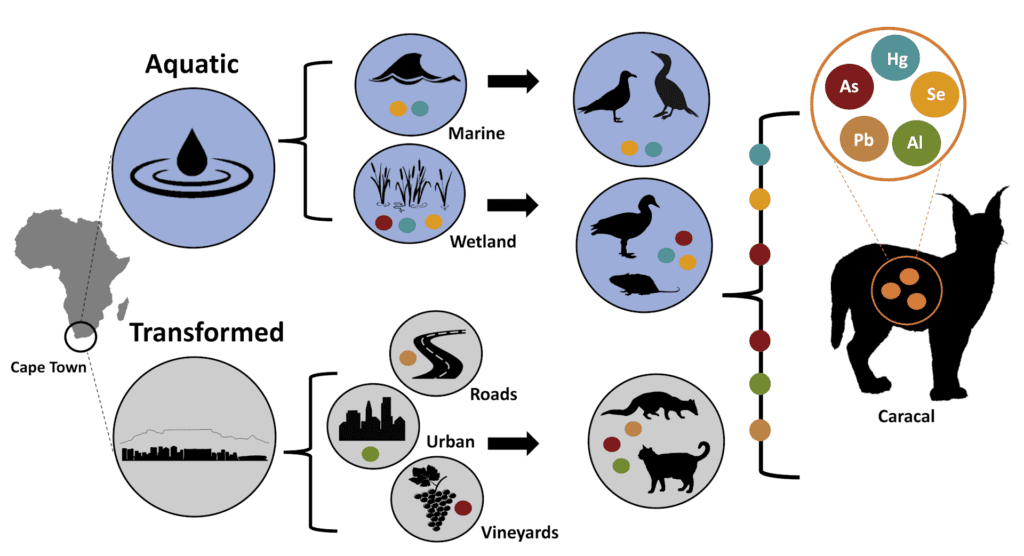
The Urban Caracal Project, a research and education initiative based at the University of Cape Town’s Institute for Wildlife and Communities in Africa, is dedicated to studying Cape Town’s caracal population. It aims to better understand the effects of urbanisation on the city’s wildlife and to discover some of the secrets of how they are able to survive in this challenging landscape.
But surviving in a rapidly expanding city isn’t easy. Indeed, it can be downright dangerous thanks to, among other issues, the increasing presence of environmental pollutants.
As conservation biologists, we are interested in how caracals become exposed to the multitude of pollutants associated with city-living. To do this, we tested the blood of caracals in Cape Town and found worryingly high numbers of different metal pollutants present. Exposure to these metals, including aluminium, arsenic, cadmium, copper, mercury and lead, most likely occurs via the prey species that caracals consume.
This raises important environmental concerns for all the city’s residents – both wildlife and human.
Read the full article at:
Gabriella Leighton - Post-Doctoral Fellow, Rhodes University, South Africa
Jacqueline Bishop - Senior Lecturer in Conservation Ecology & Genetics, University of Cape Town, South Africa
Excerpt:
Carnivores like leopards, lions and hyenas have been killing livestock for centuries, causing financial losses to farmers. In many parts of the world, farmers respond by killing these predators. This has greatly reduced the populations of some top predators like leopards and lions.
Killing predators may decrease their numbers in the short term. But there is no evidence that it is an effective way to protect livestock in the long term. For example, in South Africa, populations of the medium-sized predators like caracals and jackals that also predate on livestock increased or migrated into the area in response to lethal control efforts.
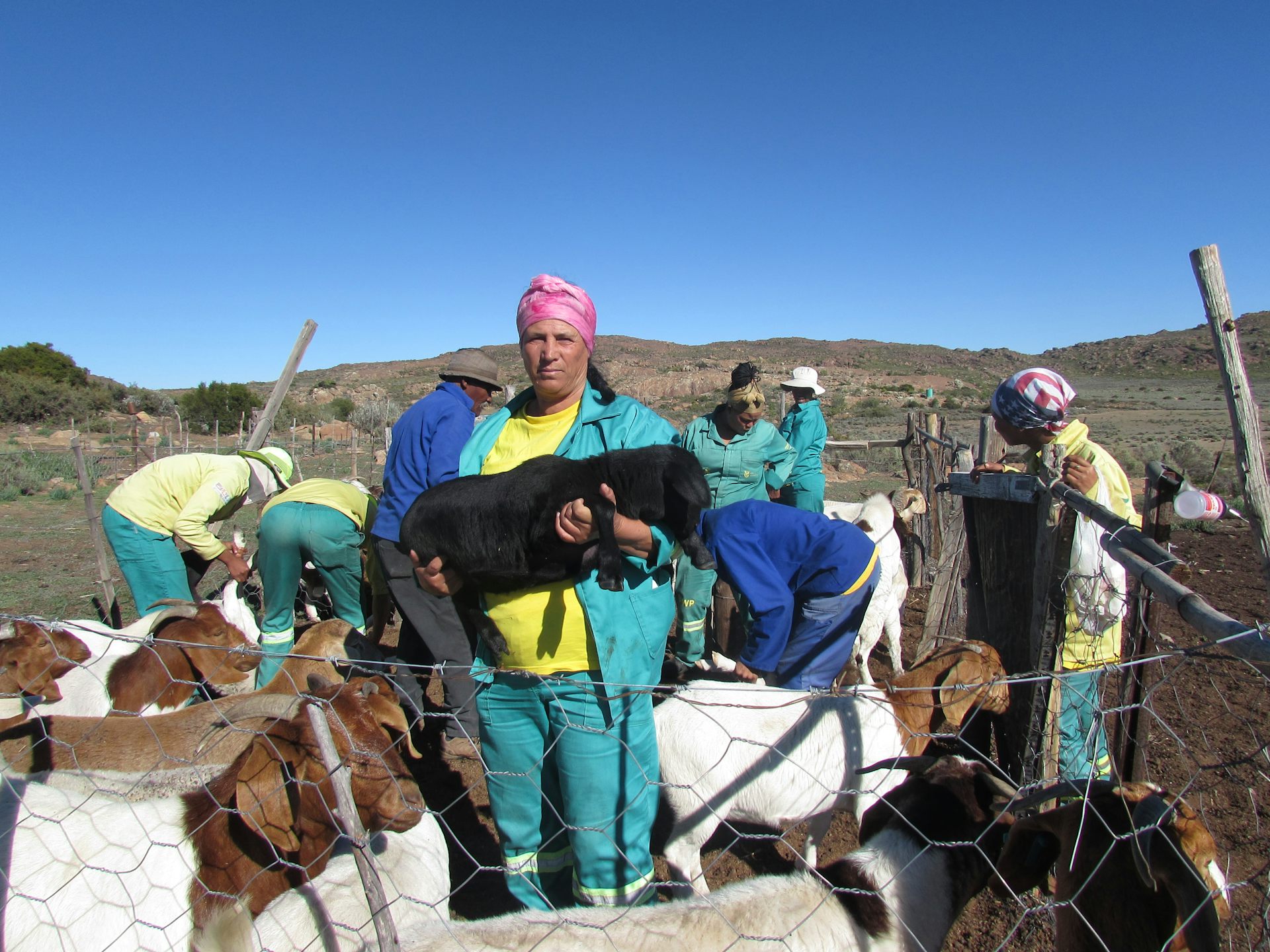
For this reason, farmers in South Africa are looking at non-lethal methods of protecting livestock. One sustainable, wildlife-friendly method is the age-old practice of herding or shepherding.
Very little data exists on how shepherding compares with lethal methods globally or in South Africa. We conducted a study in South Africa to fill this information gap. We found that shepherding was very effective. Using shepherds, livestock losses were five times lower than losses under lethal methods.
Read the full article at:
by Heidi Hawkins - Research fellow, honorary research associate, University of Cape Town, South Africa

- Researchers have spent years trapping and tracking the elusive caracal on the edges of the South African city of Cape Town to better understand the needs of these wild cats.
- Urban caracals have adapted their behavior in a number of ways to survive on the margins of the city, including hunting more during the day.
- Although highly adaptable, urban caracals face many challenges, including ingesting rat poison.
- Researchers recommend more greenways to allow the animals to survive in these heavily modified environments.
by Grace Hansen