

African Serval Cat (Leptailurus serval) Information and Facts
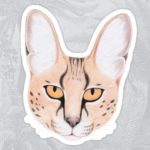
African Serval Cat Fact Sheet

Permission given for personal or educational use only
Credit: www.WildCatsofAfrica.info


from the book Cats of Africa

Follow the prey: How servals adapt to an industrialized landscape ~ Mongabay
Summary:
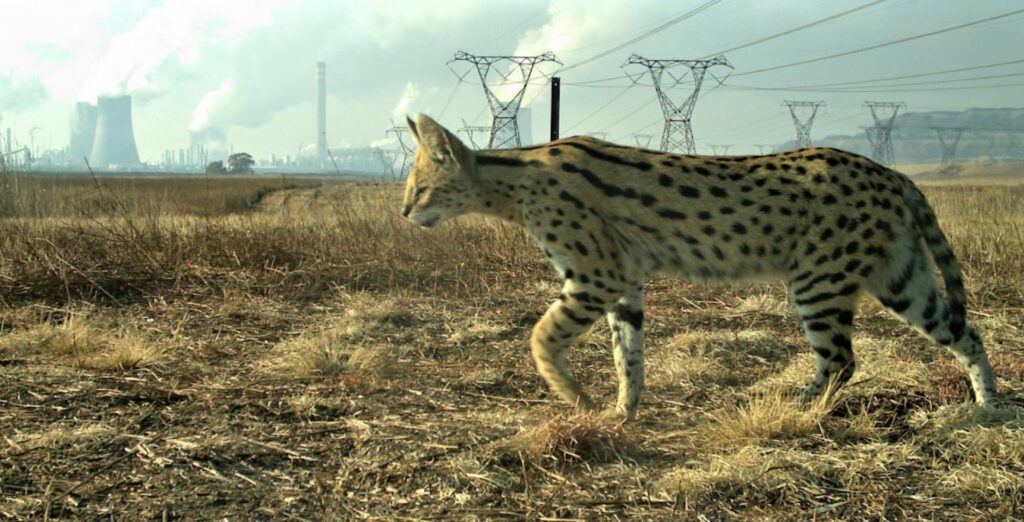
- A new study finds that servals have surprisingly high densities in the Sasol Secunda petrochemical industrial complex in Mpumalanga, South Africa.
- The study authors concluded that this wildcat, native to sub-Saharan African wetlands and savannas, can adapt to anywhere it can find abundant prey, no matter how disturbed by human presence.
- Highlighting the benefits of industrial sites for wildlife must, however, be contextualized to ensure that preserving natural habitats remains the priority, according to another cat expert.
Read the full article at:
Follow the prey: How servals adapt to an industrialized landscape
by Juliette Portala
Serval - The Cat on Spring-Loaded Stilts ~ Africa Geographic

Excerpt:
The serval (Leptailurus serval) is a medium-sized cat that looks somewhat like a cross between a small cheetah and a large house cat. In reality, they belong to the “caracal lineage” of the Felidae family, along with caracals and African golden cats, though their peculiar shapes, spotted colouration and missing ear tufts set them apart from the other two species. Servals have the longest legs in proportion to their bodies of any of the cat species (hence the model comparison) and a tawny-gold coat dotted with a mixture of spots and stripes. Like caracals, their tails are relatively short in comparison to other cat species. There are rare sightings of melanistic servals, particularly in East Africa, and leucistic individuals have been born in captivity.
The lanky limbs of the serval are not only useful in navigating long grass and dense wetland vegetation, but they confer the serval’s most well-known ability – a gravity-defying leap. The extended metatarsal bones and elongated and unusually mobile toes provide the perfect attachment points for a complex arrangement of tendons and muscles that store and release elastic energy. The result is that servals have been recorded leaping close to 3m straight up and 4m forwards, occasionally snatching hapless birds out of the air at the same time.
Read the full article at:
by Team Africa Geographic
Camera traps in trees reveal a richness of species in Rwandan park ~ Mongabay
Summary:
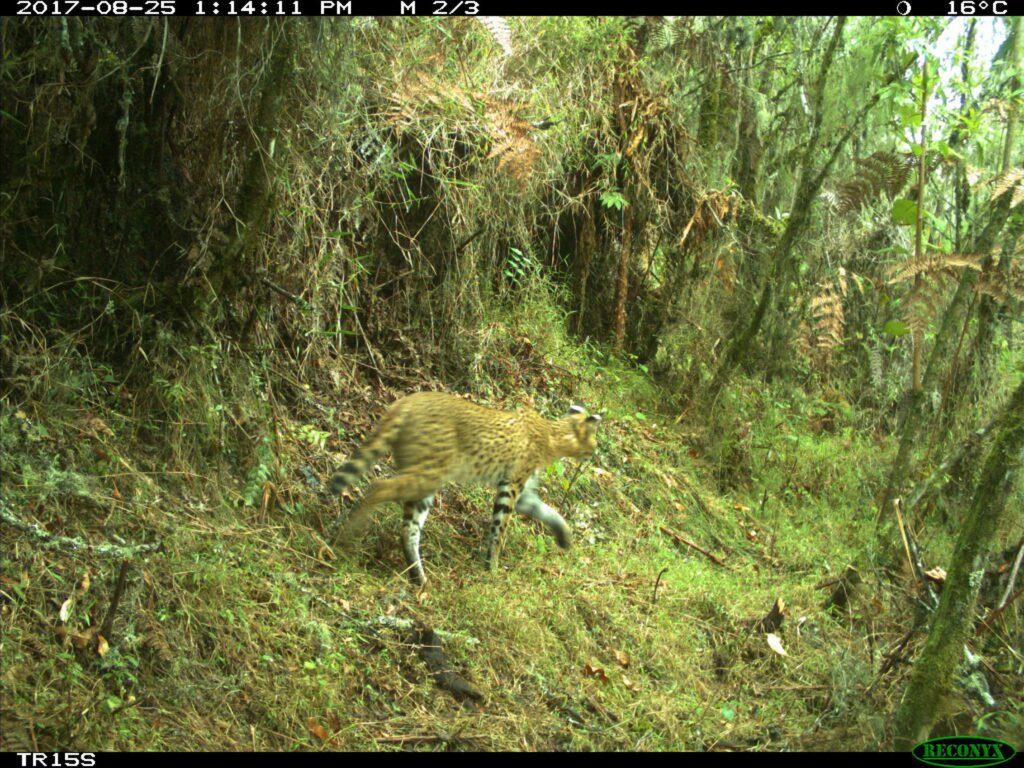
- Camera traps set high up in trees in Rwanda’s Nyungwe National Park captured 35 different mammal species over a 30-day period, including a rare Central African oyan (Poiana richardsonii), a small catlike mammal that has not previously been seen in the park.
- Arboreal camera traps are a viable method for conducting mammal surveys, especially when partnered with ground cameras.
- Understanding what animals are present in an area is a first step toward protecting them.
“Researchers found that using all three methods — ground and arboreal cameras along with a line transect — gives the most complete picture of species richness. But if only two methods can be employed, either due to time, money, or other logistical constraints, using a combination of the ground and arboreal cameras gave higher and more precise estimates of the occurrence of animals in an area than any other combination of methods.”
Read the full article at:
Camera traps in trees reveal a richness of species in Rwandan park (mongabay.com)
by Liz Kimbrough - science journalist Mongabay