
African Lion Facts and Information ~ Panthera leo

The African Lion is probably the most well-known animal! This information also includes facts about the Asiatic Lion for completeness.
Lion Scientific Name: Panthera leo
African Lion and Asiatic Lion Status
Lion Conservation Status
Globally lions have been classed as Vulnerable on the IUCN Red List however in parts of their range they are Endangered and Critically Endangered.
Global - Vulnerable (VU)
Asia - Endangered (EN)
West Africa - Critically Endangered (CR)
Reference: IUCN Red List 2025-1
Lion Lower Classifications
Numerous subspecies of lions have been described in the past, however the current taxonomy based on recent genetic data indicates there are only two valid subspecies:
Northern Lion (Panthera leo leo) - Central, West Africa and India (the only population in Asia)
Southern Lion (Panthera leo melanochaita) - Southern and Eastern Africa
In 2017 the taxonomy of the Felidae cat family was assessed which resulted in many new proposals including a revised lion classification.
World Lion Day is 10th August
Show you care and Donate to Ewaso Lions in Kenya


Lion Size
Lion Weight
Males: 150 to 272 kg
Females: 110 to 168 kg
Lion Head+Body Length
Males: 172 to 250 cm
Females: 158 to 192 cm
Lion Tail length: 60 to 100 cm
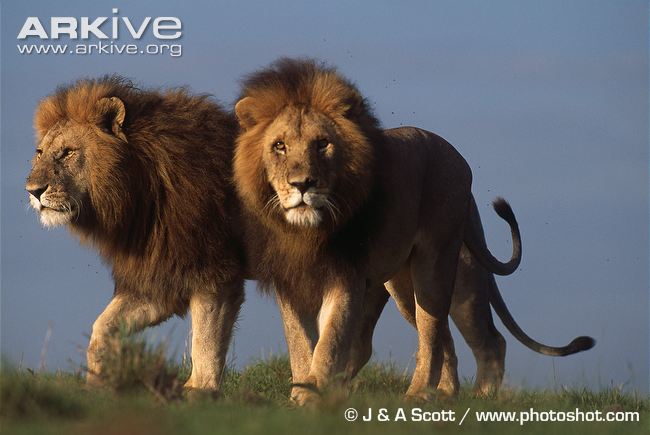
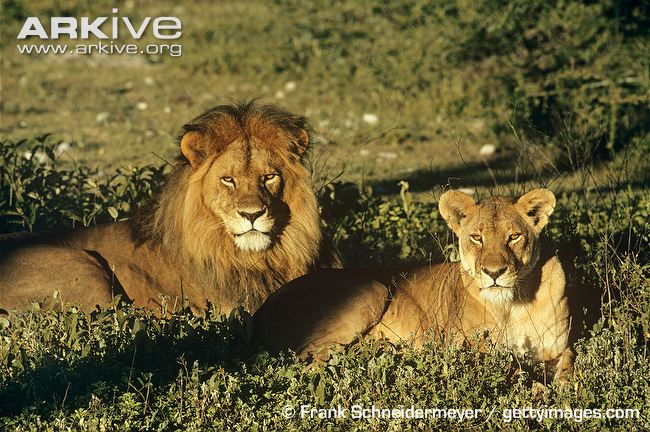
Lions are the second largest wild cat in the world and the largest big cat in Africa. Adults weigh over 100kg and males are far larger than females.
Males grow a large mane of hair and as such lions are the only cat species that display sexual dimorphism (genders have physical differences). Lions are also the only wild cats to have tufted tails.

Stream a new African Safari every night
Presented by the highly experienced safari guide James Currie, this exciting series takes you onto the plains and into the jungles of Africa.
From UNESCO World Heritage sites to stunning bird sanctuaries, and from national parks to hidden-gem wilderness areas, experienced travelers and armchair enthusiasts alike will enjoy this exhilarating tour of Africa.
Lion Range and Habitat
Lion Distribution: Africa and Asia (India)
Lion Altitude: Sea level to 3500m (some records to 4300m)
Lion Habitat: Most habitats except true desert and dense tropical forest
Historically lions occurred both in sub-Saharan Africa as well as in the north from Northern Africa into Southwest Asia and into Europe. However only a remnant population remains in India of the original northern population, and present day populations only occur in pockets in and near protected areas in sub-Saharan Africa.
The most common type of habitat occupied by lions is the mosaic of open woodland and grassland savannas of East and Southern Africa, where they occur in their highest densities. However lions also occur in a variety of other habitats from moist open forests in Central Africa to semi-arid scrub in the deserts of south west Africa.

Lion Behavior
Lion Prey: Larger herbivores
Lion Social Structure: Social in Prides
Lion Territory Size: 12 to 500 km2
Lion Range Size: 35 to 17221 km2
Lion Density: 0.05 to 38 per 100 km2
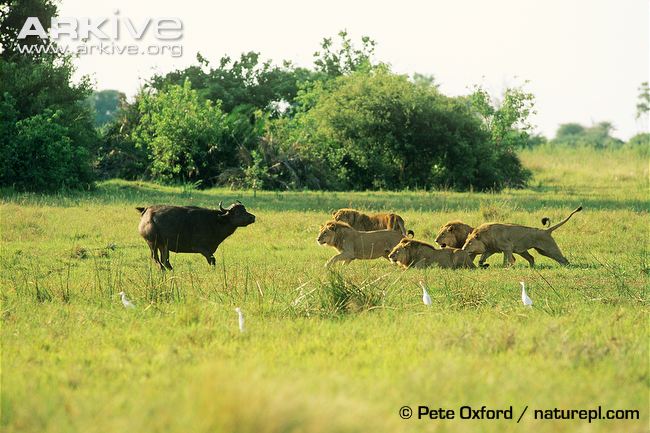
Being one of the largest cat species, lions have the physical strength to hunt the larger antelope species as well as zebras and buffaloes. Smaller prey may be taken when prey are less abundant during leaner times. Most hunts involve the co-operation of a number of lionesses, however individual lions (male or female) can also take down smaller prey on their own.
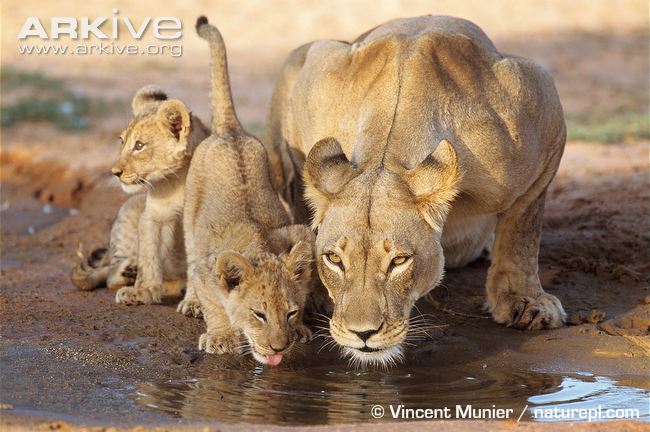
Lions are the only cats that live in social units called prides. Males and females live together over a number of generations with females tending to stay in the pride they were born into, but young males leaving to form their own prides.
The sizes of lion home ranges (territories), their total area (range size) and therefore density depends on the available prey in the habitat they occupy. Dry regions with low prey density require lions to forage much wider to encounter prey compared to moister habitats with abundant prey. Hence lion densities across Africa vary widely due to the wide variety of habitats that lions occupy.
Lion Life Cycle
Lion Gestation: 98-110 days (avg 110 days)
Lion Litter Size: 2 - 4 cubs (max 7)
Lion Sub-Adult: 18 months
Lion Maturity:
Males 26 - 28 months
Females 30 - 36 months
Lion Lifespan: 12 to 18 years in the wild
The breeding cycle of lions can vary depending on a number of factors, including whether prey are resident or migratory. Even though juveniles become mature between two and three years of age, females usually only breed around four years old and males at six years old, again dependent on many conditions such as the numbers of other mature male lions in the population.
Natural mortality of males from fighting or hunting tends to be higher than females, often occurring during the dispersal period.
Recent Research on African Lions
Here's a summary of recent research on African lions from 2024 to 2025:
1. Prey Availability and Lion Survival
A 2025 study published in Conservation Science and Practice has found a direct link between the availability of prey species and the survival of African lions. Researchers noted that areas impacted by bushmeat poaching, which reduces populations of antelope and other herbivores, show corresponding declines in lion numbers. The findings emphasize the importance of holistic conservation that includes protection of both predators and their prey.
Source: Mongabay News, Feb 2025
2. Invasive Species Affecting Lion Hunts
A University of Florida-led study revealed that invasive big-headed ants are altering East African ecosystems by displacing native ants. This shift reduces tree cover, limiting the ambush cover lions use during hunts. The result is lower hunting success and increased energy expenditure for lions.
Source: The Guardian, Jan 2024
3. Social Aging in Lions
Oxford University researchers discovered sex-based differences in how lions’ social networks evolve with age. Male lions tend to lose social ties over time, while females maintain consistent bonds. These insights have implications for understanding lion longevity and reproduction.
Source: University of Oxford, Aug 2024
4. Endangered West African Lions
Niokolo-Koba National Park in Senegal remains a last refuge for critically endangered West African lions. Despite conservation programs, threats like poaching for traditional charms (gris-gris) persist, posing a serious challenge to their survival.
Source: Associated Press, Jan 2024
5. Disease and Microbiome Studies
In South Africa, conservation scientists are studying the gut microbiomes and immune systems of lions to understand their response to diseases like bovine tuberculosis. These studies are critical for future wildlife health management.
Source: Zymo Research, Dec 2024
These studies underscore the multifaceted challenges facing African lions, from ecological changes and disease to human-induced threats. Ongoing research and conservation efforts are essential to ensure the survival of this iconic species.