
The Ten Wild Cats of Africa and Their Unique Ear Adaptations
In the African wilderness, survival depends not only on stealth and speed but also on senses honed by evolution for hunting, avoiding predators, and communicating. One of the most vital of these senses is hearing—and in wild cats, the ears are nothing short of anatomical marvels. Whether it’s detecting the high-pitched squeak of a mouse or discerning the rustle of prey in tall grass, the ears of Africa’s wild cats are uniquely adapted to their environments and lifestyles.
This article delves into the fascinating world of feline ears, with a focus on the ten wild cat species native to Africa: the lion, leopard, cheetah, caracal, serval, African golden cat, jungle cat, African wildcat, black-footed cat, and sand cat.

The Mechanics of Feline Hearing
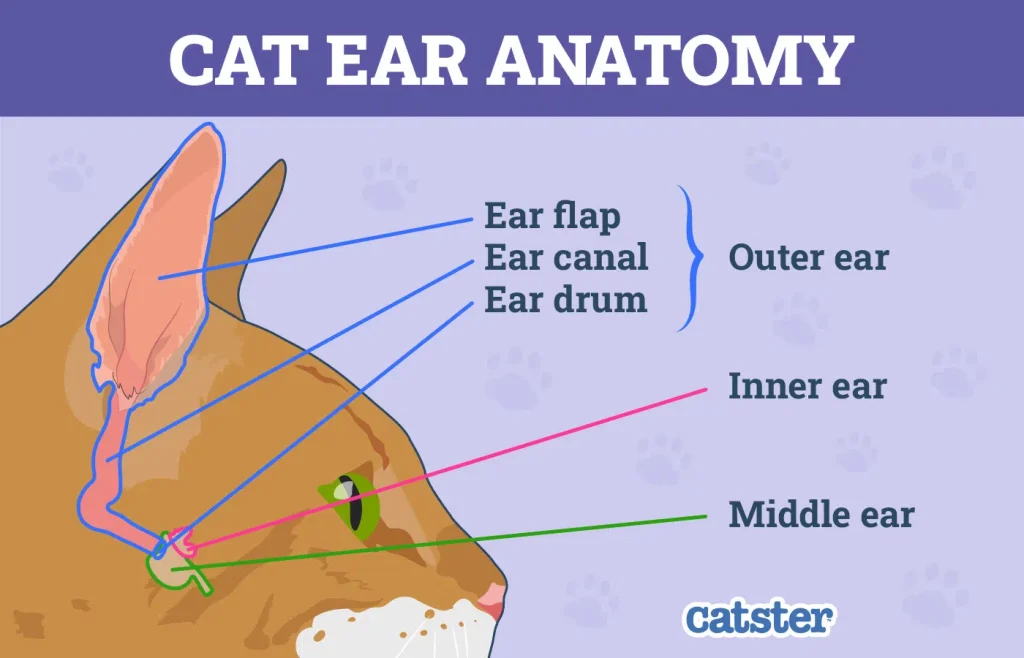
Before exploring the specifics of each species, it’s important to understand how a cat’s ear works. The outer ear, or pinna, is the visible flap that funnels sound waves into the external auditory canal, where they travel to the tympanic membrane (eardrum). From there, vibrations pass through the middle ear, which houses the three smallest bones in the mammalian body—the malleus, incus, and stapes—and into the inner ear, where the cochlea converts vibrations into nerve signals the brain can interpret.
The feline pinna is especially mobile - cats can independently rotate each ear up to 180 degrees, allowing them to triangulate the source of a sound with exceptional accuracy. This ability is particularly well-developed in wild species that rely on auditory cues for both hunting and evading threats.
The hair inside a cat’s ears, known as tragi or ear furnishings, play a crucial role in protecting and maintaining auditory function. These fine hairs help filter dust, debris, and insects, preventing them from entering the ear canal and potentially causing infections or blockages. They also aid in modulating sound vibrations, fine-tuning the cat's hearing sensitivity by reducing excess noise or wind interference. In wild cats, these inner ear hairs are particularly important during stalking or resting in dusty, debris-filled environments such as dry forests or savannas. As wild cats often rely on their acute hearing to detect prey or danger in dense cover, the protective and acoustic-regulating role of ear hairs is vital to their survival and stealth.
The backs of wild cats’ ears often feature distinctive coloration or markings - commonly referred to as "ocelli" - which may play roles in communication, camouflage, or prey distraction.
Cat Ears vs. Human and Dog Ears
Cats, in general, hear a wider range of frequencies than both humans and dogs. While the average human hearing range spans from 20 Hz to 20,000 Hz, domestic cats can hear up to 64,000 Hz. Dogs vary by breed but typically top out around 45,000 Hz. This high-frequency sensitivity allows cats to detect the ultrasonic calls of rodents and other small prey.
Wild cats possess this same advantage - amplified even more by specific adaptations in different species, as we’ll explore below.

Listening in the Wild: A Look at the Ears of Africa’s Wild Cats
The Three Big Cats
1. Lion (Panthera leo)
Lions, being social animals, use their ears for both hunting and communication. Their rounded pinnae are relatively smaller than those of some other wild cats, prioritizing durability over acute mobility in the harsh savannah.
The back of the lion’s ear is solid black or very dark brown, contrasting sharply with the tawny body color. These dark patches may serve as visual signals during group hunting or movement in tall grass. Cubs may follow the ear markings of their mother or siblings, and adult lions may use them for intraspecific signaling.
Lions produce and detect a wide range of vocalizations, from low rumbles to thunderous roars, but their hearing is also sharp enough to catch the movements of prey at night, aided by their nocturnal activity patterns.
2. Leopard (Panthera pardus)
Stealth hunters by nature, leopards depend heavily on acute hearing to locate prey in dense foliage. Their ears are more mobile than a lion’s, and their sensitivity to high frequencies aids them in pinpointing the subtle movements of small animals.
The back of their ears is typically black with a conspicuous white central spot (ocellus). These ocelli are thought to help communicate with cubs or warn intruders, and possibly help cubs locate their mother in dense foliage.
Leopards also communicate through rasping calls, growls, and other sounds, all of which are intricately tied to their auditory capabilities.
3. Cheetah (Acinonyx jubatus)
Cheetahs are diurnal hunters, relying more on sight than some of their nocturnal relatives. Still, their ears are streamlined for speed and directional hearing.
The backs are black with faint or no central spots and less pronounced ocelli compared to leopards. As more visually-oriented diurnal hunters, the dark ears may reduce glare or signal position to cubs or allies.
The black “tear marks” running from their eyes to their mouths are believed to help reduce glare but also aid in focusing their hearing by reducing echo around the head. Their ability to detect distress calls from prey over long distances also helps them locate potential meals.


The Three Medium Sized Cats
4. Caracal (Caracal caracal)
Caracals have some of the most distinctive ears among African cats - long, tufted, and incredibly expressive. The tufts, or ear furnishings, are thought to aid in communication and possibly help funnel sound into the ear canal.
The back of the ear is black, sharply outlined, and topped with a long black tuft of fur. The tufts may enhance visual signals and aid in silent communication, especially in mating or mother-young interaction. Some theories suggest the tufts break up the silhouette for camouflage.
Caracals can detect birds taking flight or small animals rustling in grass with incredible precision, making their ears one of their most important hunting tools.
5. Serval (Leptailurus serval)
The serval’s ears are large and rounded, ideal for detecting high-frequency sounds emitted by rodents. These cats hunt primarily by sound, often pausing motionless in tall grass to listen for prey underground. Their success rate when pouncing on hidden animals is exceptionally high, thanks to this acute sense of hearing.
The prominent pinnae can move independently and cover a broad soundscape. The ears have black backs that often display one or two white ocelli and are believed to help with intraspecific signaling in tall grasses, especially between mother and young.
6. African Golden Cat (Caracal aurata)
Secretive and elusive, the African golden cat resides in dense rainforests and highland regions. Its rounded ears are adapted for maneuvering through thick undergrowth and detecting low rustling sounds.
Their ears have dark backs, sometimes with a faint central pale spot, though less distinct than leopards or servals. This contrast to their pale, plain (unspotted) coats may aid in communication in forested environments or provide some level of visual camouflage.
While not as visibly distinctive as the caracal or serval, the golden cat’s hearing is fine-tuned for silent stalking in an acoustically complex environment.


Credit: Save Wild Cats Foundation
The Four Smaller Cats
7. Jungle Cat (Felis chaus)
Though more commonly associated with Asia, the jungle cat’s range extends into northeastern Africa. With relatively large, pointed ears, the jungle cat excels at hunting near wetlands and reed beds, where auditory cues are essential for detecting amphibians and birds. Its ears are well-suited for picking up both low and high frequencies in a varied habitat.
Their ears are reddish to grayish-brown with a small black patch on the back, short ear tufts and occasional whitish markings. As this species often inhabits reeds and wetlands, the markings may aid in low-light visual signaling.
8. African Wildcat (Felis lybica)
The wild ancestor of the domestic cat, the African wildcat has ears that are nearly identical to house cats - triangular, forward-facing, and extremely mobile.
Their ears are generally reddish or gray on the back and may have faint dark rims. The low contrast markings may play a minimal camouflage role in scrubland or savannah.
These cats are mostly nocturnal and rely on their ears to detect the movement of insects, rodents, and small reptiles in dry grasslands and scrub.
9. Black-Footed Cat (Felis nigripes)
One of the smallest wild cats in the world, the black-footed cat is a nocturnal specialist with proportionally large ears for its size.
It boasts one of the highest hunting success rates of any wild feline, largely thanks to its ability to hear prey even beneath the ground. Its ears are finely tuned to detect subtle sounds in the arid plains and sparse vegetation of southern Africa.
Their ears are dark gray to black on the back, with no obvious ocelli or pale markings and the plain coloration may assist in camouflage while stalking in low vegetation. These cats are highly solitary and a lack of markings may indicate there is little requirement for any signaling function.
10. Sand Cat (Felis margarita)
The sand cat is perhaps the auditory champion of the African wild cats. Living in some of the harshest desert environments, this small feline has large, low-set ears and a widened auditory canal. These adaptations allow it to detect underground movement of burrowing animals.
Their ears are pale to sandy-colored, blending with the desert background and sometimes slightly darker at the base, but no ocelli. Their ear coloring helps them remain undetected in a low-contrast, open desert environment and there is no known social signaling function.
The sand cat's ear structure also protects it from wind-blown sand, and the ear opening can close slightly when burrowing or resting.

Jungle Cat showing reddish backs of ears, black tip and short tufts.

African Wildcat showing reddish backs of ears.

Black-Footed Cat showing plain backs of ears.

Sand Cat showing large triangular ears.
Conclusion
From the imposing lion to the tiny black-footed cat, Africa’s wild felines exhibit a remarkable range of ear shapes and auditory adaptations. Whether hunting in the rainforest, desert, or savannah, each species has evolved ear structures tailored to its environment and lifestyle.
Across African wild cats, the backs of the ears may serve a variety of adaptive purposes, depending on ecology and behavior:
Intraspecific signaling – aiding cubs in tracking adults (lions, leopards, servals).
Camouflage – disrupting outlines (caracals, sand cats, black-footed cats).
Predator deterrence when young – through deceptive or eye-like markings (leopards, servals).
Communication in social species – via conspicuous markings or ear tufts (lions, caracals).
These markings are especially relevant in dense habitats, such as forests or tall grasslands, where visual signals supplement vocal or scent-based communication.
Despite their diverse sizes, habitats, and hunting strategies, all of these cats share a common evolutionary trait - ears that are not just tools for hearing, but sophisticated instruments of survival. Their ability to detect, interpret, and respond to sound is a testament to the importance of hearing in the predator-prey balance of the African wild.
Understanding the anatomy and function of these ears not only enriches our appreciation of these majestic animals but also underscores the intricate interplay between form, function, and habitat in the natural world.
Scientific and Academic Sources
Heffner, H.E., & Heffner, R.S. (1985). Hearing range of the domestic cat. Hearing Research, 19(1), 85–88.
A foundational study on the frequency range of domestic cats, often used as a reference point for wild felines.
King, A.S. (1987). Physiology of the Domestic Cat: Comparative Aspects with Wild Felids. In Comparative Anatomy and Physiology of the Domestic Cat.
Provides insight into anatomical similarities and variations among felids.
Sunquist, M., & Sunquist, F. (2002). Wild Cats of the World. University of Chicago Press.
Comprehensive guide to all wild cat species, with details on morphology, habitat, and behavior, including ear characteristics.
Estes, R.D. (1991). The Behavior Guide to African Mammals: Including Hoofed Mammals, Carnivores, Primates. University of California Press.
Useful behavioral and anatomical details on African mammals, including the ten wild cat species.
Hunter, L. (2015). Wild Cats of the World. Bloomsbury Publishing.
A modern field guide that includes excellent photographs and habitat-specific adaptations, including sensory biology.
Caro, T. (2005). Antipredator Defenses in Birds and Mammals. University of Chicago Press.
Kingdon, J. (2015). The Kingdon Field Guide to African Mammals.
Reputable Online Resources
Panthera.org – Conservation-focused profiles on wild cat species:
https://www.panthera.orgARKive (Wildscreen Archive) – Multimedia and anatomical descriptions of wild species (no longer actively updated but accessible via web archives):
https://web.archive.org/web/*/arkive.orgAfrican Wildlife Foundation – Species Profiles
https://www.awf.org/wildlife-conservationThe IUCN Red List of Threatened Species – Species-specific ecological, anatomical, and behavioral data:
https://www.iucnredlist.orgNational Geographic – Big Cats Initiative
https://www.nationalgeographic.com/animals
Anatomy References
Dyce, K.M., Sack, W.O., & Wensing, C.J.G. (2010). Textbook of Veterinary Anatomy (4th ed.). Saunders Elsevier.
Contains diagrams and descriptions of ear anatomy in domestic animals, useful for comparative understanding.
Feldman, E.C., & Nelson, R.W. (2004). Canine and Feline Endocrinology and Reproduction (3rd ed.). Saunders.
Though focused on domestic cats and dogs, includes information on ear physiology and hormonal effects on development.