Jungle Cat Physical Characteristics

Jungle Cat (Felis chaus) Information & Facts

Jungle Cat Facts

Scientific Name

Felis chaus

Common Names

Although called the Jungle Cat in Asia, it is commonly known as the Swamp Cat or Reed Cat in Africa (subspecies Felis chaus nilotica) due to its occurrence in wet habitats.

Name Origin

The name Felis chaus was derived from the Caucasus Mountains where the Jungle Cat was first discovered.

History

The Jungle Cat was tamed by ancient Egyptians to hunt wildfowl and has been featured in Egyptian art. A few mummified remains have been found in tombs.

Identification

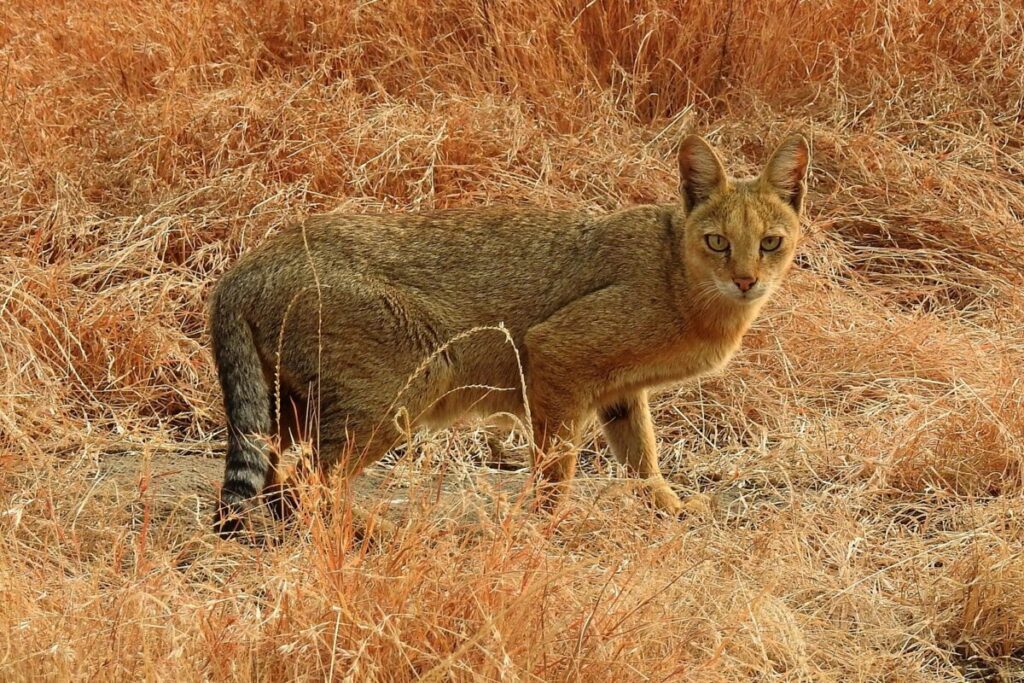
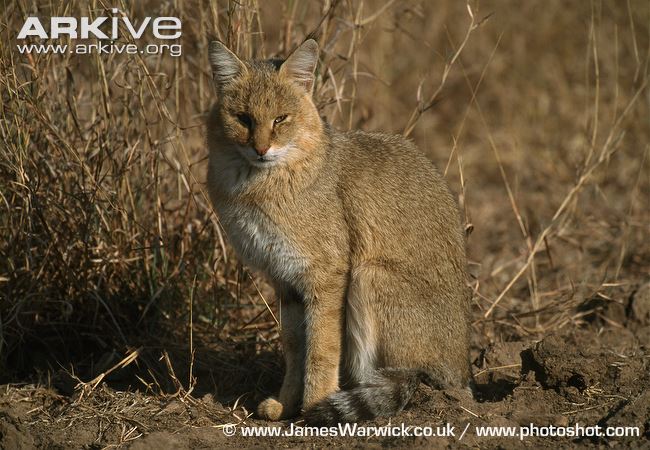
The Jungle Cat's plain coat varies from sandy yellow to reddish in its southern range to shades of grey in the north. There are light brown stripes on the legs and a few rings on the tail which has a dark tip.

Description in Detail

Distribution

The Jungle Cat is widespread in Asia with the extreme edge of its range in northeast Africa.

Distribution in Detail

Unique Behaviour

Jungle Cats feed mainly on small rodents, birds, hares, fish and reptiles. They are often active in the daytime and are unusually good swimmers. In the wild they make use of the disused burrows of other animals but with the loss of habitat they are increasingly being sighted near human settlements.

Jungle Cat (Felis chaus)
Jungle Cat (Felis chaus) by Terry Whittaker

Jungle Cat Key Facts

*   Mostly Asia range

*   Active day & night

*   Strong swimmers

Video: Jungle Cat Species Spotlight by Big Cat Rescue

Further Information

The following professional organizations have well researched and accurate information on Jungle Cats:

African Safari series

Stream a new African Safari every night

Presented by the highly experienced safari guide James Currie, this exciting series takes you onto the plains and into the jungles of Africa.

From UNESCO World Heritage sites to stunning bird sanctuaries, and from national parks to hidden-gem wilderness areas, experienced travelers and armchair enthusiasts alike will enjoy this exhilarating tour of Africa.

Articles about Jungle Cats

Most articles about Jungle Cats are about the species in their Asian range, nevertheless, here are some interesting articles written by experts:

Jungle cats adapt to life on a farm ~ Mongabay
Jungle Cat India
The jungle cat (Felis chaus) in a field. Photo Yatin Verma/Mongabay.

Excerpt:

"With dwindling natural habitats, the jungle cat has adapted more readily than most other small cats, to live in cultivated and artificial landscapes. A natural pest manager, the solitary jungle cat consumes approximately 1,500 rodents annually."

Watch the full documentary at:
Jungle cats adapt to life on a farm - Mongabay

Rare jungle cat spotted in central Turkey ~ Hurriyet Daily News
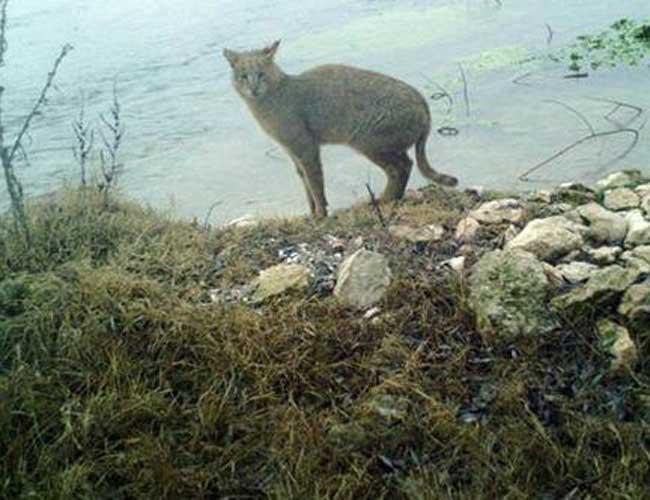
Jungle Cat Turkey
Image Emir Özay

Excerpt:

A rare jungle cat has been spotted for the first time in the Central Anatolian province of Eskişehir. Emir Özay, a master’s student of forestry student at Bartın University, captured images of the cat, the scientific name of which is Felis chaus.

Read the full article at:

Rare jungle cat spotted in central Turkey ~ Hurriyet Daily News
Mistaken identity becomes a major threat for India’s small wild cats ~ Mongabay
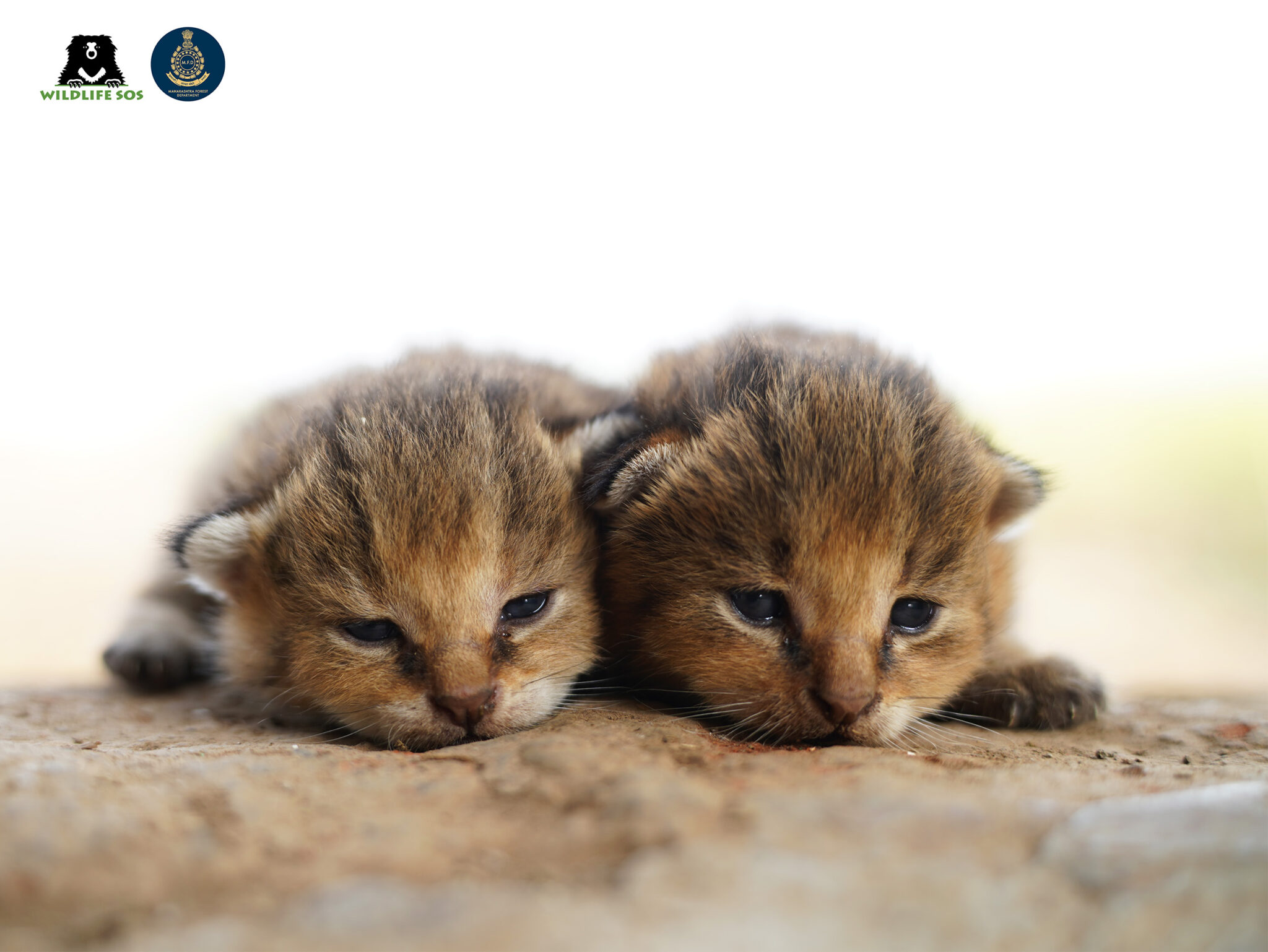
Jungle cat kittens
A pair of month-old Jungle cat kittens were found in a sugarcane field. Photo WildlifeSOS.

Excerpt:

  • Small wild cats in India, often become victims of retaliatory killing or dislocation due to misidentification as more dangerous cats.
  • Pastoral communities resort to retaliatory killing whereas farmers in the plains mistake cats like rusty-spotted cat, jungle cat, fishing cat and leopard cat cubs for big cat offsprings and try to get rid of them.
  • In West Bengal, direct persecution is one of the major threats the population of fishing cat is facing.
  • Experts stress the necessity of awareness campaigns to mitigate the threat of misidentification. Such initiatives have shown promise in reducing retaliatory killings and fostering coexistence.

Read the full article at:

Mistaken identity becomes a major threat for India’s small wild cats - Mongabay

Share this Page